How a Veteran Built an A-Frame Cabin in the Blue Ridge Mountains
By Morry Kamara · · Updated · 7 min read · design stories
It started with a trip, not a blueprint.
After coming home from deployment, I needed to decompress. I booked a cabin retreat in the Shenandoah Valley - nothing fancy, just a place in the mountains where I could think straight. The peace hit different than I expected. The simplicity of waking up surrounded by trees, with no schedule and no noise, gave me something I didn't know I was looking for.
I left that trip knowing I wanted a place like that. Something I could return to whenever I needed that reset.
Trying to Buy Before Building
My first move was to shop. I spent weeks browsing cabin listings around the Shenandoah Valley, looking for something that matched what I had in mind. But nothing clicked. The layouts felt generic. The designs were either too rustic or too cookie-cutter. And the ones that came close were either out of budget or needed so much work they might as well be new builds.
So I made a decision that changed everything: I'd build what I couldn't find.
Finding the Right Land
I found a few adjacent lots just outside of Luray, Virginia - the town that sits at the base of the Blue Ridge, about 15 minutes from Shenandoah National Park's Thornton Gap entrance. The location was perfect: close enough to town for convenience, deep enough in the mountains for privacy.
What I looked for in land:
- Road access (no landlocked parcels)
- Proximity to Shenandoah NP and Luray
- Buildable terrain with good drainage
- Adjacent lots for future expansion
- Mountain views without extreme elevation
Buying multiple lots next to each other was intentional. Even then, I was thinking beyond one cabin.
The Sparrow: Learning by Building
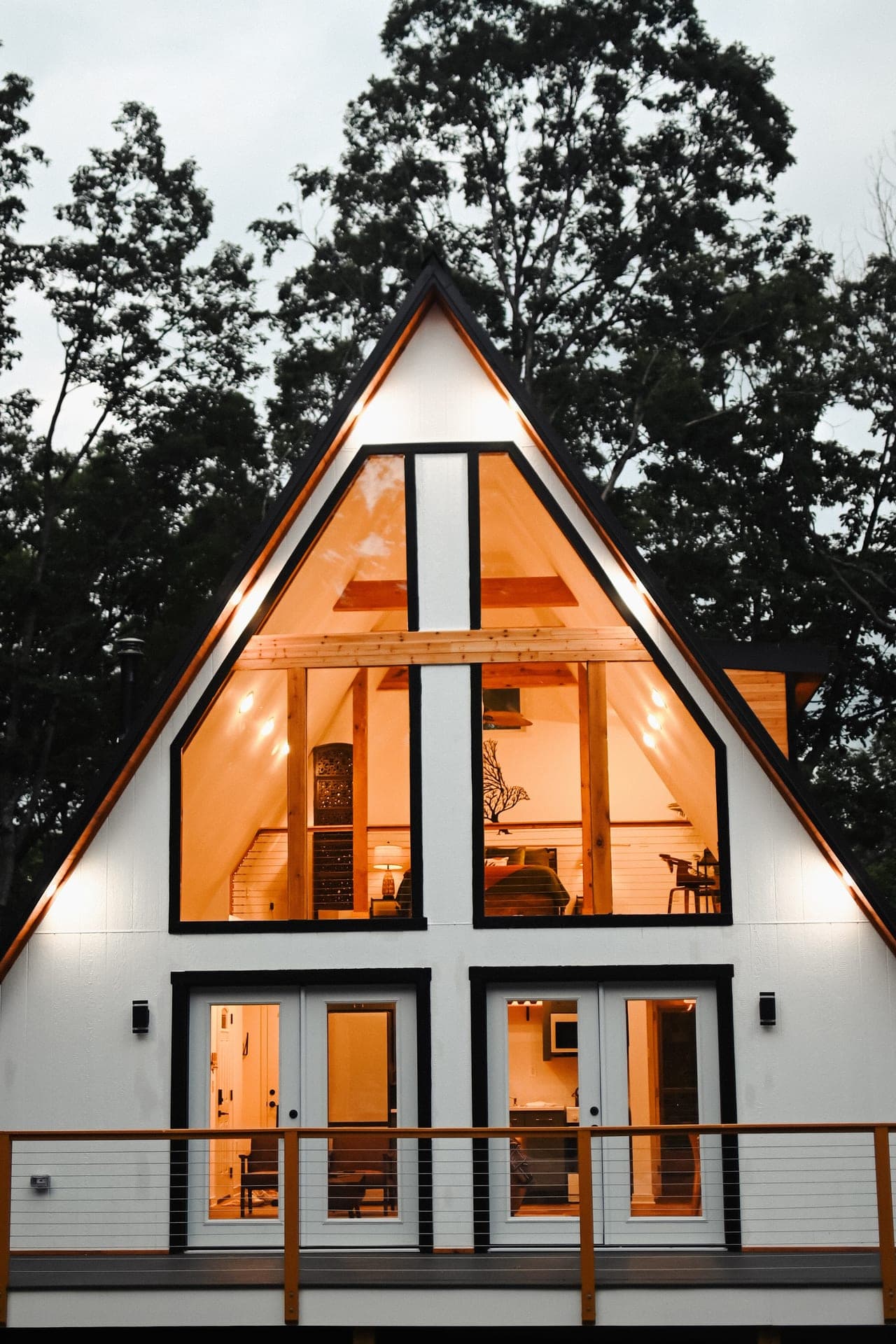
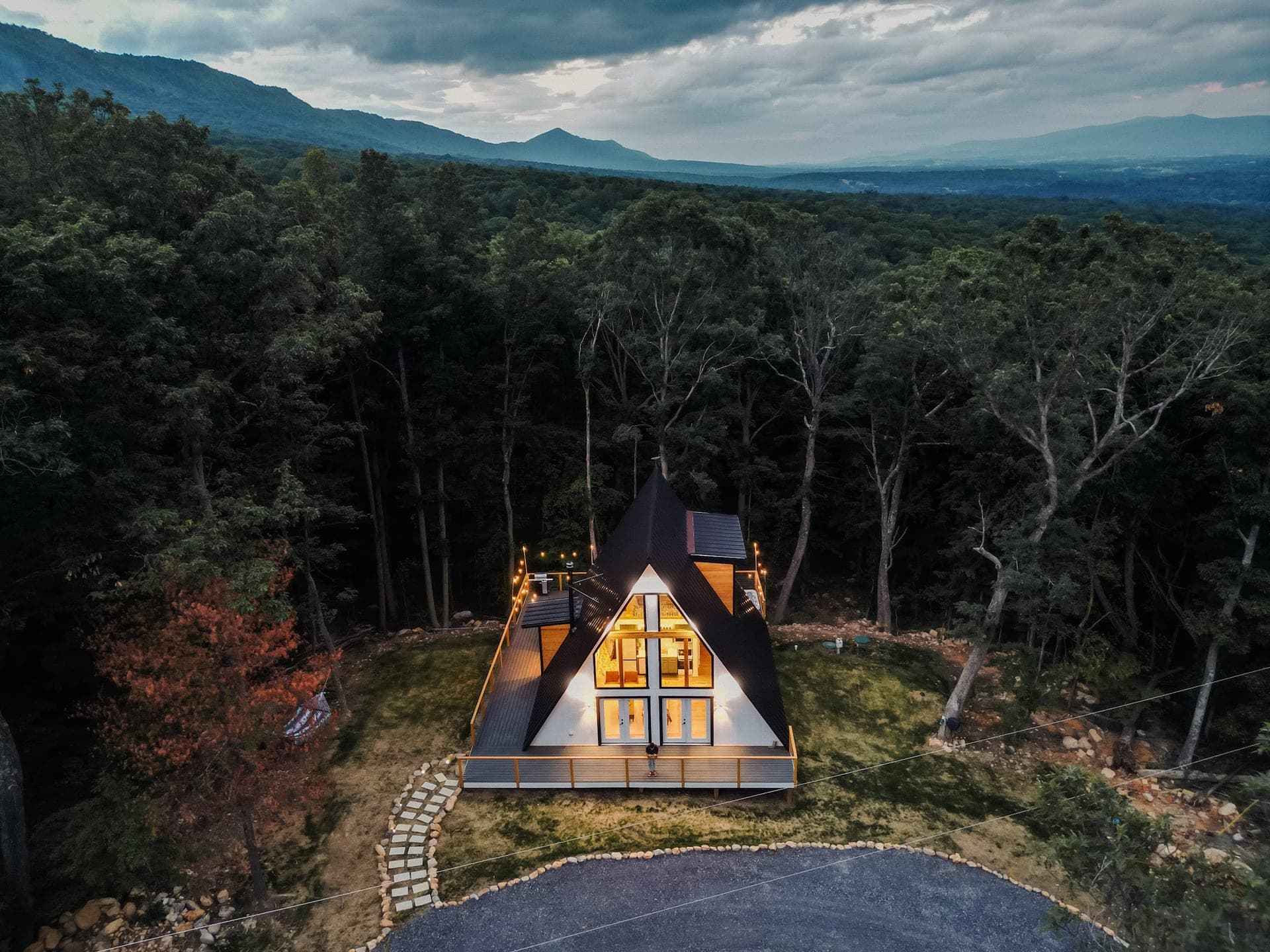
The Sparrow was my first project - a 1,000 square-foot A-frame built from DEN Outdoors plans. I chose DEN because their designs had the exact aesthetic I was after: modern A-frame with clean lines and big windows.
I had some prior experience around construction, but I'll be honest - I wasn't a general contractor yet. For this build, I worked alongside an experienced builder who knew the trade inside and out. I managed the project, made decisions on materials and design, coordinated schedules, and stayed involved in every phase. But I also leaned on expertise where I needed it.
Key decisions on The Sparrow:
- DEN Outdoors A-frame plans (not a kit - plans only)
- Wood-burning stove instead of gas fireplace
- Floor-to-ceiling windows to maximize the mountain views
- African-inspired interior design as a deliberate contrast to the Nordic architecture
- Moroccan-inspired main floor bedroom with warm tones and floor pillows
That last point is what makes The Sparrow different from every other A-frame rental in the Valley. The exterior is Scandinavian minimalism. The interior is African warmth. That blend isn't an accident - it's personal. What it's like to stay in now is in our guide to the A-frame.
The Design Language
Most A-frame cabins in the Shenandoah Valley look the same: white walls, Edison bulbs, barn doors. There's nothing wrong with that, but it wasn't what I wanted.
My African heritage influenced every interior decision. Rich textures. Bold patterns. Warm earth tones. The Moroccan-inspired bedroom with its carpeted seating area and floor pillows isn't something you find in a typical mountain rental. Neither is the way the African design elements play against the sharp angles of the A-frame structure.
The design philosophy:
- Clean Nordic architecture as the shell
- African warmth and texture as the soul
- Every room should feel intentional, not decorated
- Guests should experience something they've never stayed in before
The Turtle: Running the Show
After The Sparrow was complete and hosting guests, I took on my second cabin: The Turtle. But this time was different. I handled every facet of the process myself.
What I managed on The Turtle:
- Land acquisition and due diligence
- Permitting through Page County
- Hiring and managing all subcontractors
- Material selection and procurement
- Timeline management and scheduling
- Budget tracking and cost control
- Design decisions from floor plan to finish
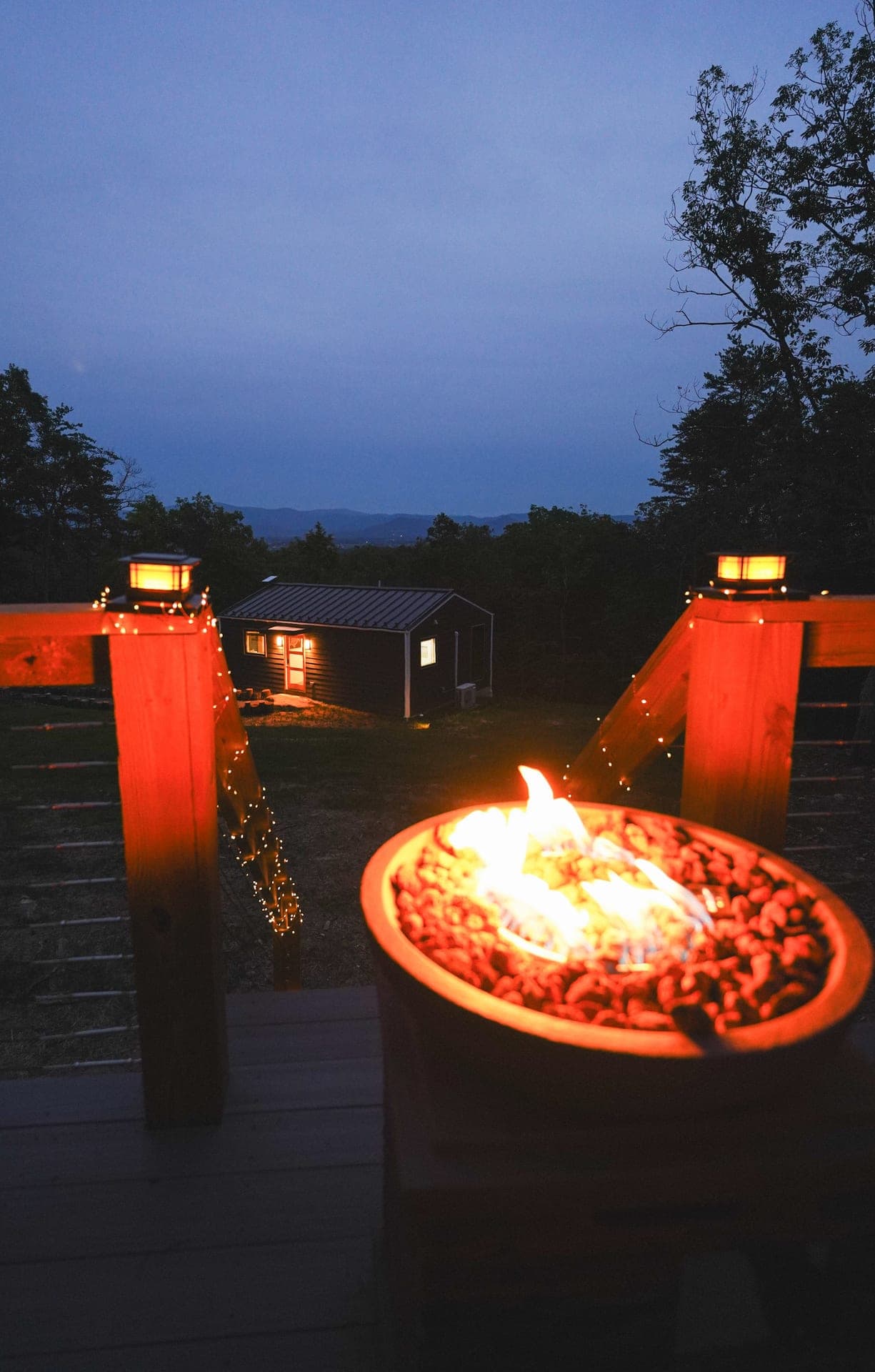
The Turtle was designed exclusively for couples - a one-bedroom retreat with floor-to-ceiling glass walls, a king bed facing the forest through a 7' x 6' picture window, and an elevated observation deck with a swinging bench for stargazing. Smaller than The Sparrow, but more focused.
Building The Turtle taught me what building The Sparrow couldn't: how to run a construction project from start to finish, handle every moving piece, and deliver a finished product that meets your own standards.
Getting Licensed
After completing two cabins, I decided to make it official. I earned my Virginia Class A General Contractor license - not because I wanted to start building for other people commercially, but because I wanted to approach my own projects with a higher level of professionalism and structure.
The licensing process reinforced things I'd already learned on the job: building codes, safety standards, project management, and the legal framework around construction in Virginia. Having the license means every future build carries the accountability and standards that come with it.
What I Learned About Building Cabins
Choose Your Land Carefully
The lot matters more than the plan. Bad drainage, difficult access, or unclear property lines will cost you more than any design upgrade.
Don't Be Afraid to Learn on the Job
My first build was a collaboration. My second was solo management. By the third, I had a GC license and two successful projects behind me. You don't need to know everything on day one.
Design for Your Guests, Not for Trends
Edison bulbs and shiplap are fine, but they don't make a guest remember your cabin. A Moroccan-inspired bedroom with floor pillows does. African textiles against A-frame angles do. Give people something they haven't seen before.
Build Adjacent, Not Scattered
Buying lots next to each other was one of the best decisions I made. It allows for a compound layout - a cohesive brand, and the ability to host group retreats across neighbouring cabins. It also simplifies management.
The Numbers Matter
I published a detailed cost breakdown on YouTube for The Sparrow. Transparency about what a luxury A-frame actually costs helps other aspiring builders plan realistically.
The Compound Takes Shape
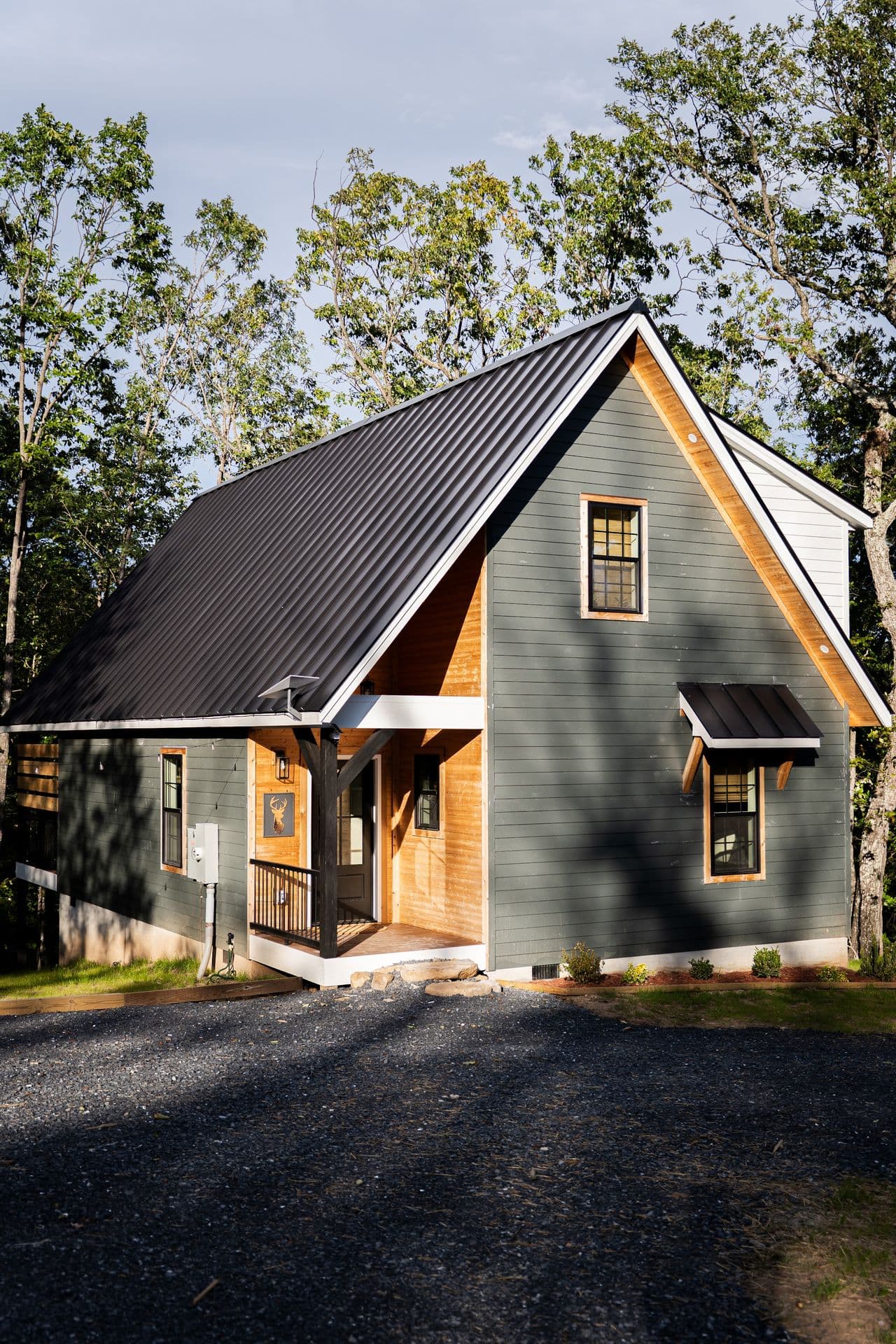
Today, The Sparrow and The Turtle sit on adjacent lots in Luray, and The Stag - a 2-bedroom, 2-bathroom cabin with a game loft - is finished on the next lot over and opened for booking in October 2026. Three cabins, three lots, one compound. The vision that started with a veteran looking for peace after deployment turned into a real business.
Kamara Cabins by the numbers:
- 3 cabins, all open
- 490 Airbnb reviews, averaging 4.95 (as of September 2026)
- Superhost, with both open cabins marked Guest Favorite on Airbnb
- Virginia Class A General Contractor licensed
The name "Kamara" means "arch" - a nod to the doorways we walk through that change us. That cabin trip after deployment was my doorway. Everything since has been building on what I found on the other side.
Advice for Aspiring Cabin Builders
Start with why. If you're building just to have a rental property, you'll make different decisions than if you're building something that reflects who you are. Both are valid, but know which one you're doing.
Get your hands dirty, but know your limits. I worked alongside professionals on my first build and ran the show on my second. There's no shortcut to understanding how a building comes together, but there's also no shame in hiring people who know more than you.
Think compound, not cabin. If you can acquire adjacent lots, do it. One cabin is a rental. Multiple cabins on connected land is a destination.
Let your story be your brand. The Shenandoah Valley has hundreds of cabin rentals. What makes Kamara different isn't the hot tub or the Starlink internet - it's the African heritage design, the veteran origin story, and the fact that every cabin was built with a specific vision, not a generic template.
Ready to see what intentional building looks like?
See how The Stag was built at @kamara.cabins on Instagram, where we shared the build from cleared ground to finished rooms.